
After learning to see and construct the head and facial structure we moved on to drawing the shapes in two values, still using basic shapes, no features yet.
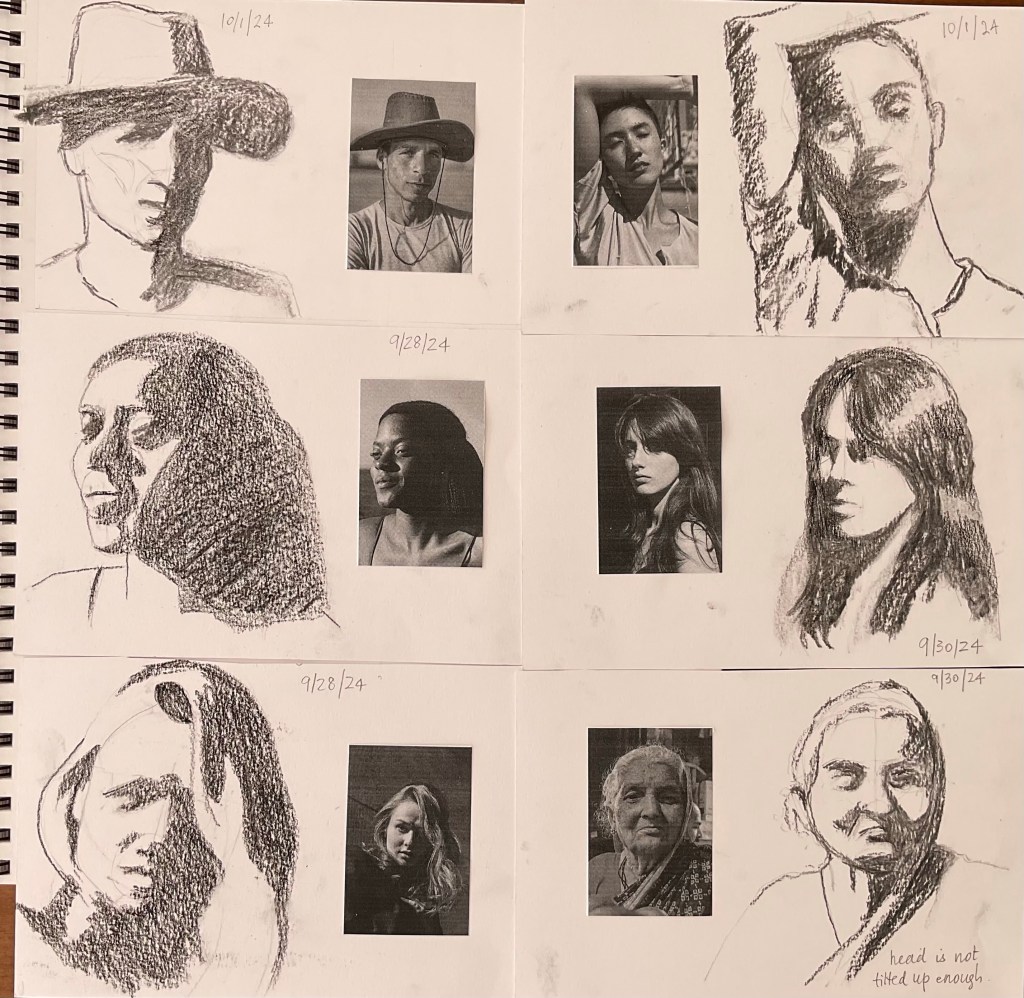

After learning to see and construct the head and facial structure we moved on to drawing the shapes in two values, still using basic shapes, no features yet.
At a local Life Drawing lesson in the Spring the instructor had materials from LoveLifeDrawing.com.
I was impressed with the straight-forward breakdown of difficult concepts (how to draw a live figure), so I looked at the website and worked on the ‘Fresh Eyes Challenge’.
This Fall, I saw LoveLifeDrawing was offering a new Portrait Course. This fit with my goals, so I joined the ‘study group’. This costs a monthly fee that pays for all courses as long as you are a member. The teacher is called Kenzo and he’s in the UK.
It was a great course! The subject was broken down into manageable steps, and the site has lots of opportunity for sharing your work and progress, plus an excellent system for receiving video feedback once a week. The course was on live Zoom calls, with real-time questions encouraged.
Two or three times a month there is a live ‘Co-drawing’ session for 90 minutes each time. We all draw 5 minute and 15 minute poses/portraits and then can hold up our work for immediate feedback.


Per-Conference Workshop
In April I went to the annual conference of the Portrait Society of America, this year in Atlanta, GA. I had a wonderful time!
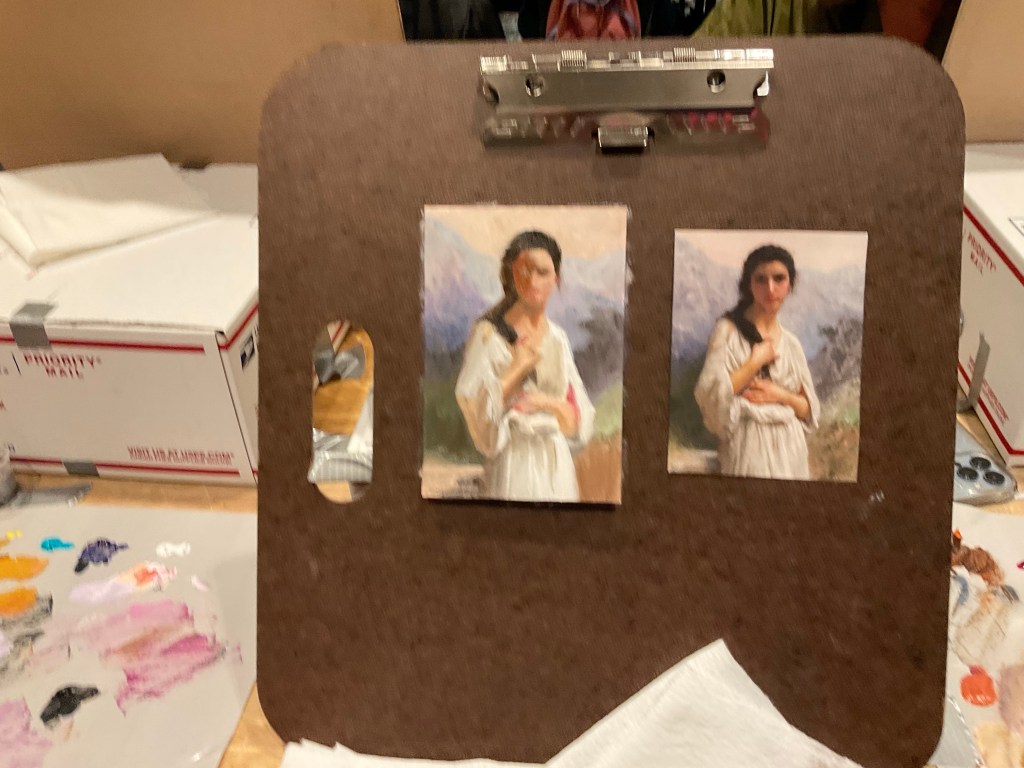
I took an all-day pre-conference workshop with Louis Carr, on preparing for painting by doing color studies. He was a great teacher, starting with a fascinating talk on human perception and the illusions of color.
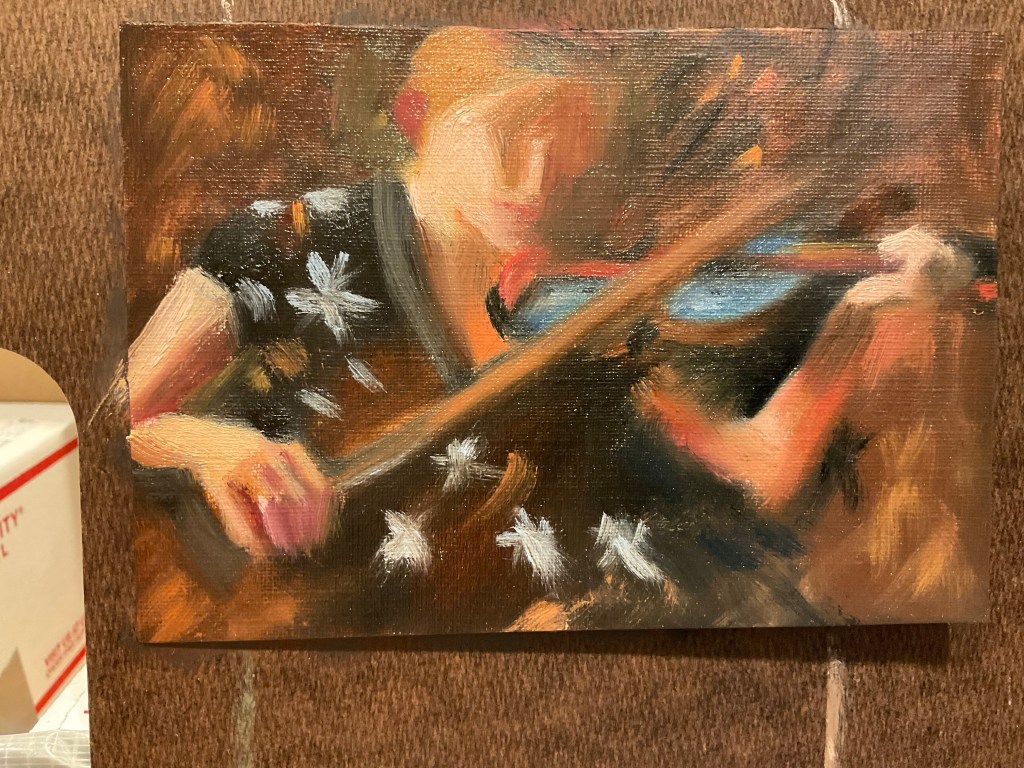
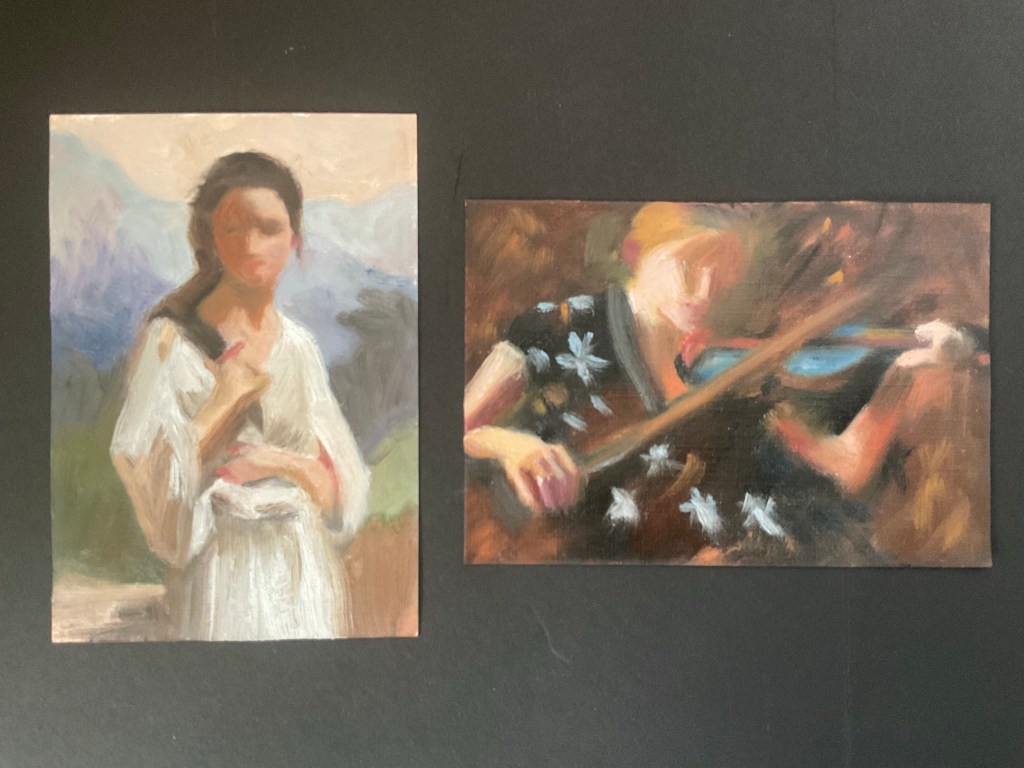
All 30 people in the class painted color studies under his direction, from small photos of other paintings, just trying to match their shapes and colors.
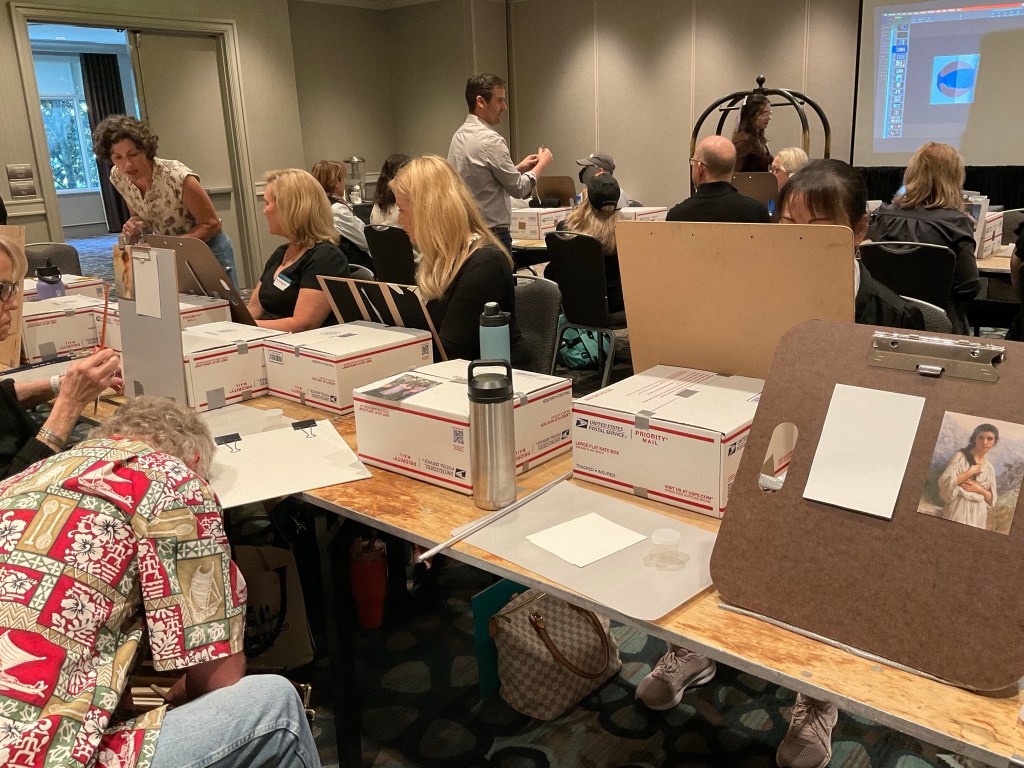

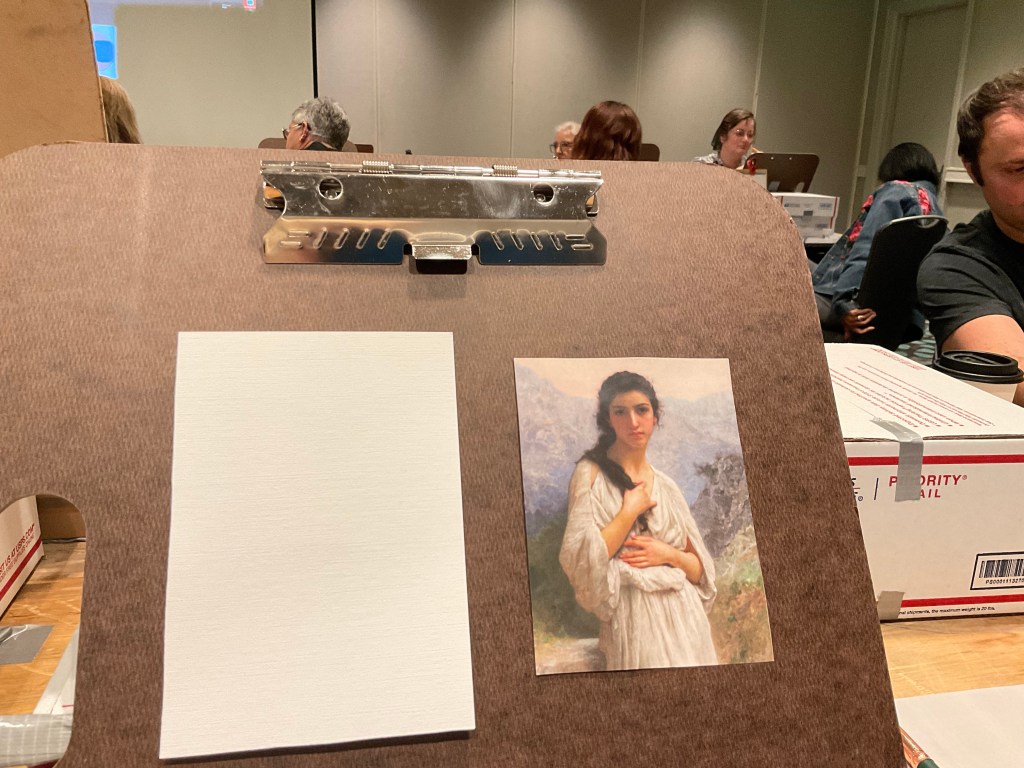
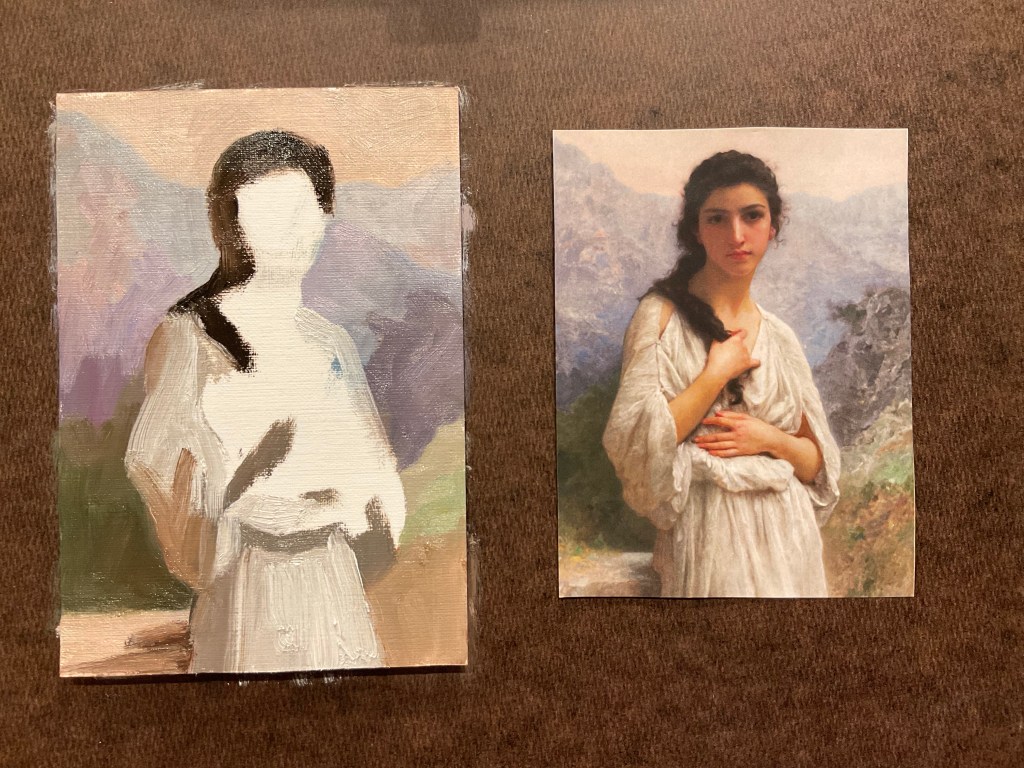

December 07, 2023
(I wrote this a couple of months ago, but a lot of October and November has been taken up with the end of life of my mother. She has now passed away, and I’m attempting to return to my ‘usual’ practices).
Following on from the Mastering Composition Course (Ian Roberts) which I took in January-March 2023, I then signed up for the Bold Brushwork Course (April-June). This was only open to people who had taken part in the Mastering Composition Course.
The first lessons and exercises were to practice value scales, edge scales and gradations in paint—(Ivory black and Titanium White). Most students used oil paint, although some used acrylic, watercolor, gouache, or pastel.

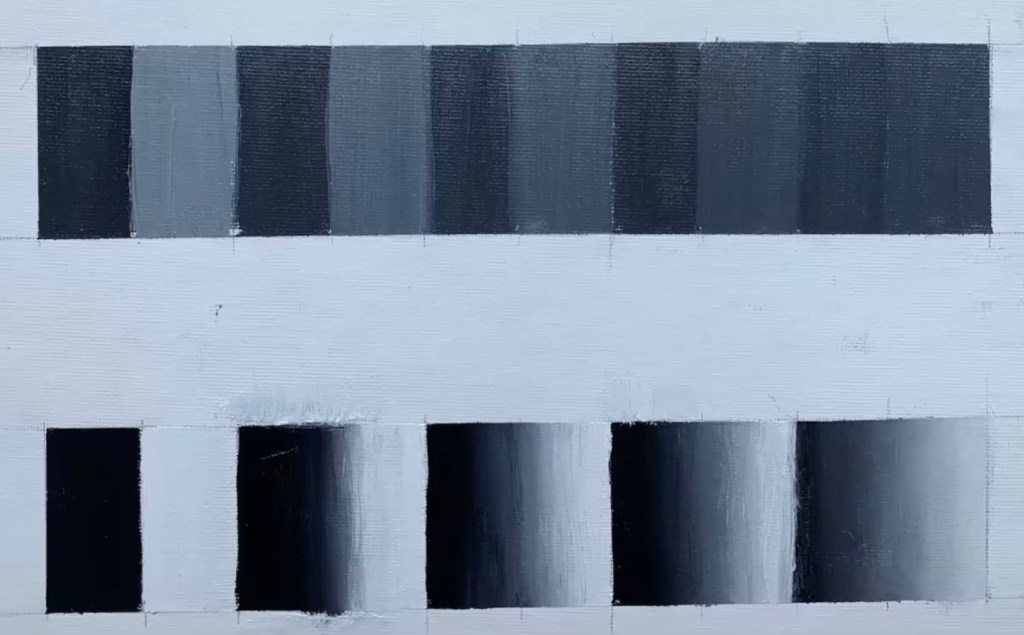
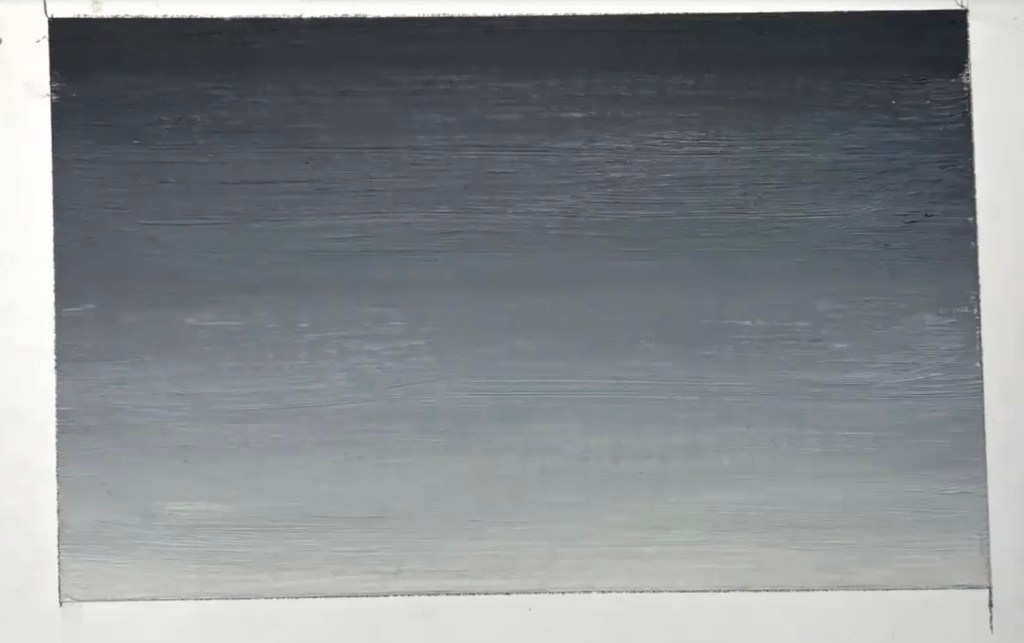
Then we painted compositions in black and white, concentrating on values, shapes, and edges, using a ‘Paint It and Leave it’ approach.


The next step was to consider color temperature, and to do this we added yellow ochre to the palette to indicate warm light, and used the ivory black to indicate cool light. (Our paintings were limited to warm light and cool shadow situations for the learning purpose).


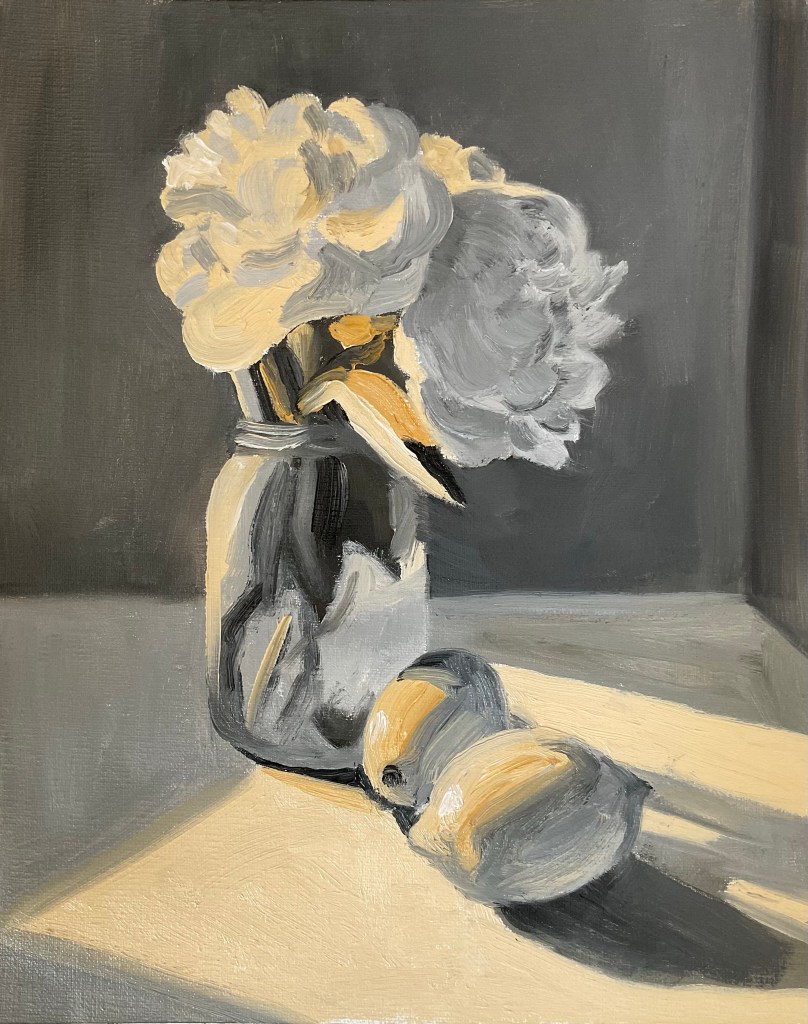


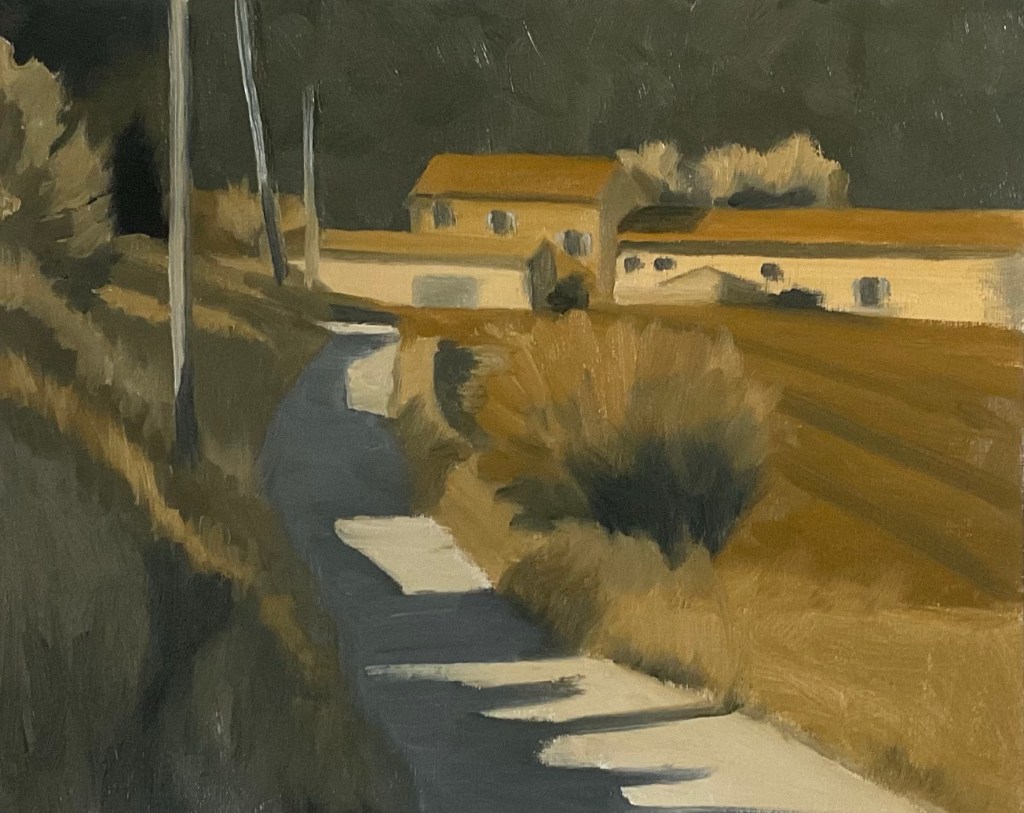
In the final part of the course, we added an extra color dimension and used Ultramarine Blue, Cadmium Orange and Titanium White. Now there was more intensity to deal with, either to mute or to use in small amounts as an accent.

It was a very rewarding course. I felt I improved at putting on thick paint and ‘one touch’ brushstrokes, and gained a much better understanding of color temperature.
In May I attended the Annual Conference of The Portrait Society, my second year to go, this time in Reston, VA. I had a wonderful time, meeting people from last year, meeting new people, learning new things and receiving critiques.
This year I attended a pre-conference workshop, 9 am-4 pm on Thursday before the Conference started. From the 4 options available I chose ‘Drawing on Emotion’ with Mary Whyte. She gave us drawing instruction in the morning and I drew each of the two models.
In the afternoon she guided us through considering how to instruct and pose the models to depict a certain, chosen emotion. Again I drew the two models. She walked around and gave us helpful critiques on our drawings.


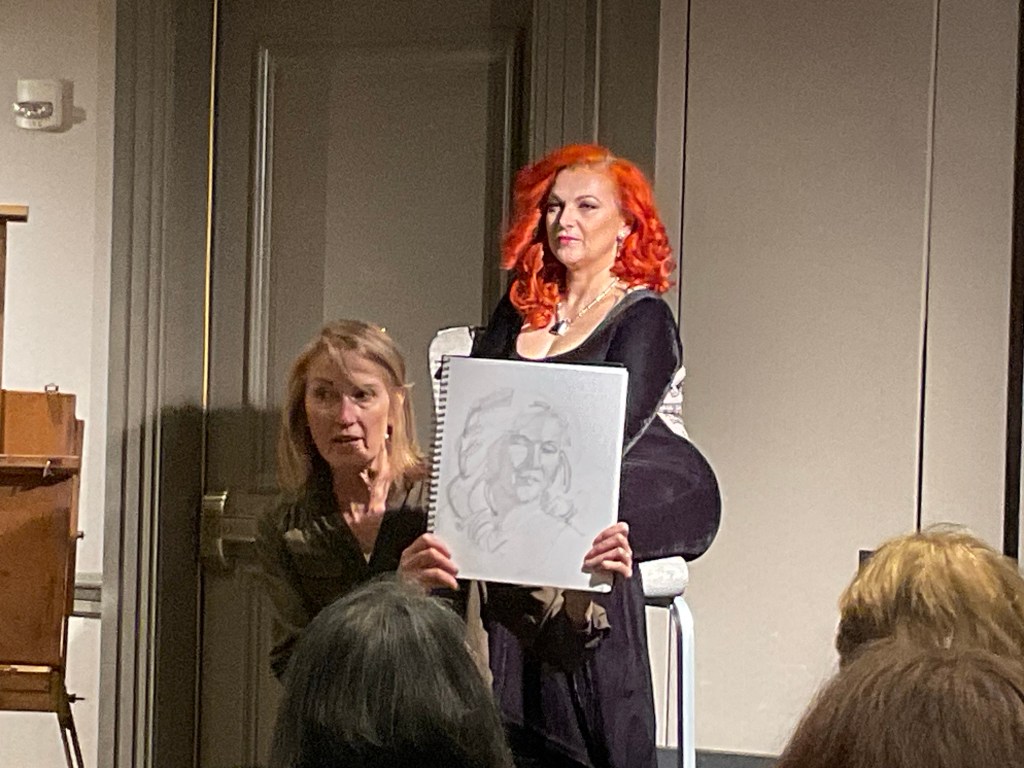


The first main event of the Conference on Thursday evening was the ‘Face-Off’, where 18 artists paint or sculpt 6 models, 3 artists to each model. Attendees could walk around and watch the portraits in progress—all very different approaches!


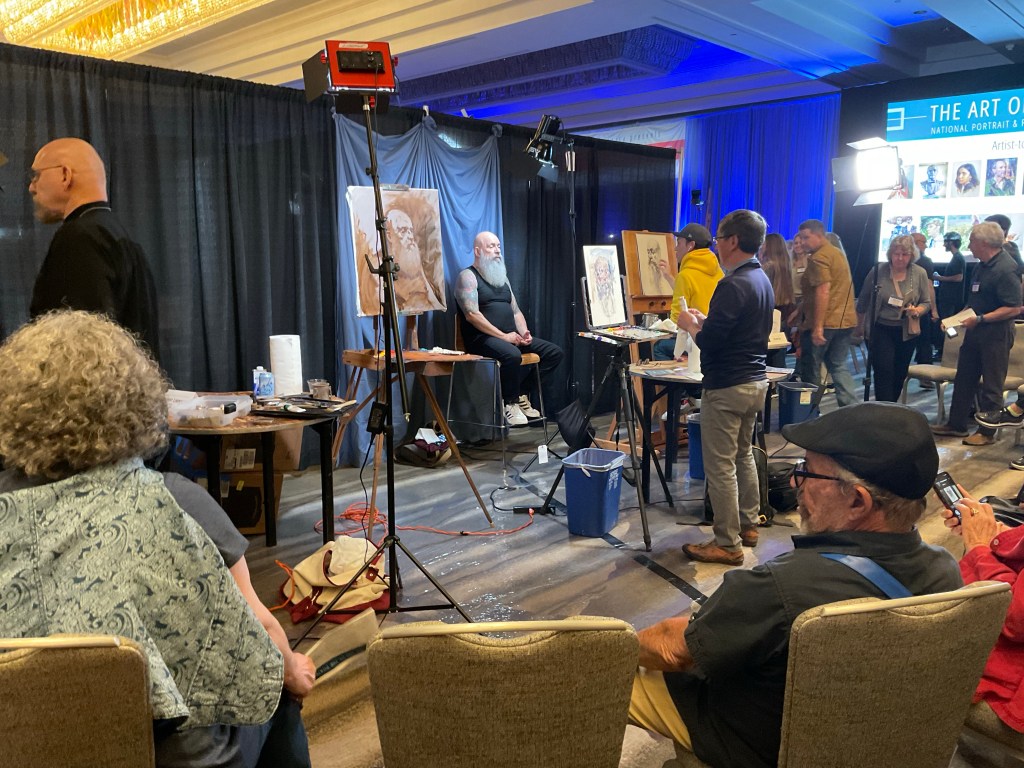
I also enjoyed two breakout sessions, several main stage demos and talks, the Gala Banquet, and the talks with artists who were the finalists in the International Competition. A highlight for me, as last year, were the lunch time Critique Sessions. I showed my portfolio to six different artists and received very helpful advice.
All in all it was a wonderful four days of learning and inspiration!
I decided my focus learning area for this year would be composition. When I saw this course advertised by Ian Roberts I thought it would be a good fit. I have had his book for many years and often referred to it, and also receive his monthly mini-instruction videos.
The 6-week course ran from January-March, and was followed by a 30-day Challenge up til April 6.
It consists of a weekly live Zoom instruction session, 2 or 3 assignments during the following week with accompanying instruction videos and a Buddy system for critiques. I’ve found them all to be very beneficial.




Cara, Oil on gessoed MDF board, 9 x 12 ins.
I painted this, using my own photo, after watching lessons by Jane French on Domestika.
She uses a direct approach and a square brush technique. I like her paintings because she uses surprising colors on the skin tones, and yet from a distance they meld in beautifully.
I did not achieve the same colors in the skin tones here. That needs another attempt. I’m happy with the brushwork changes I made.
The picture reminds me of a happy conversation on a pleasant evening with friends.

8 x 10 ins, oil on canvas board
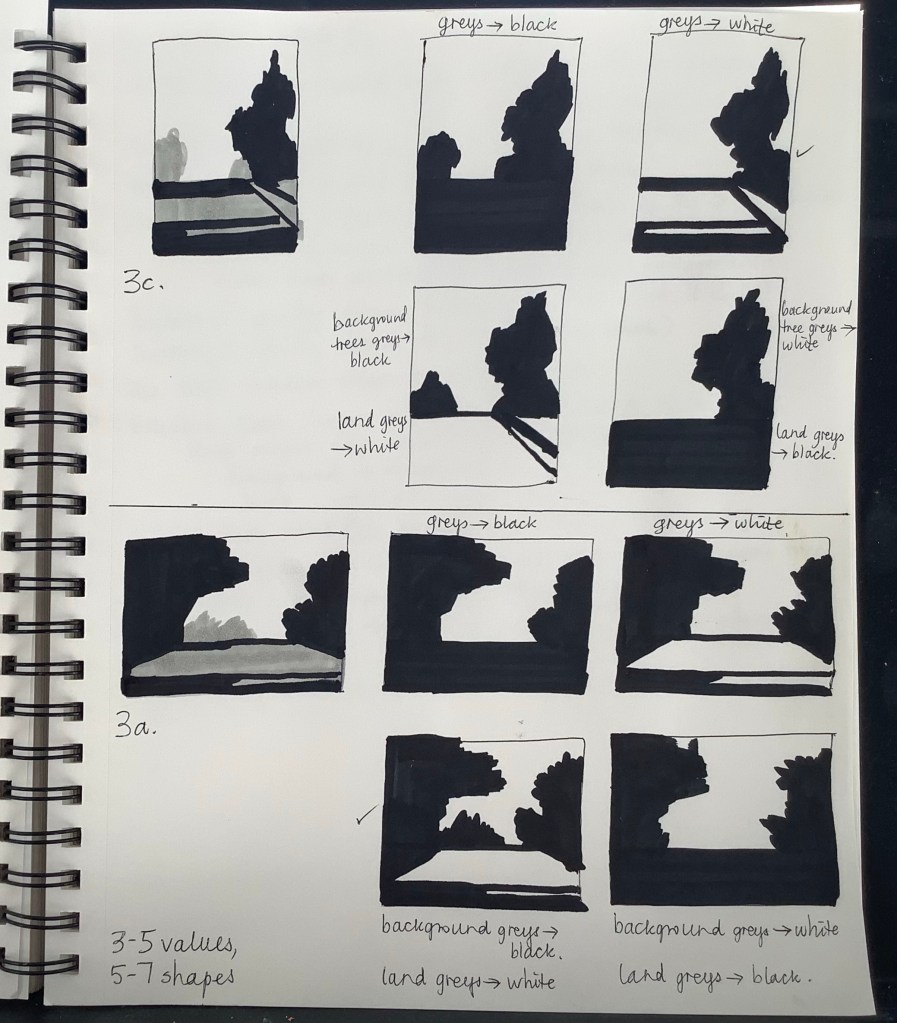
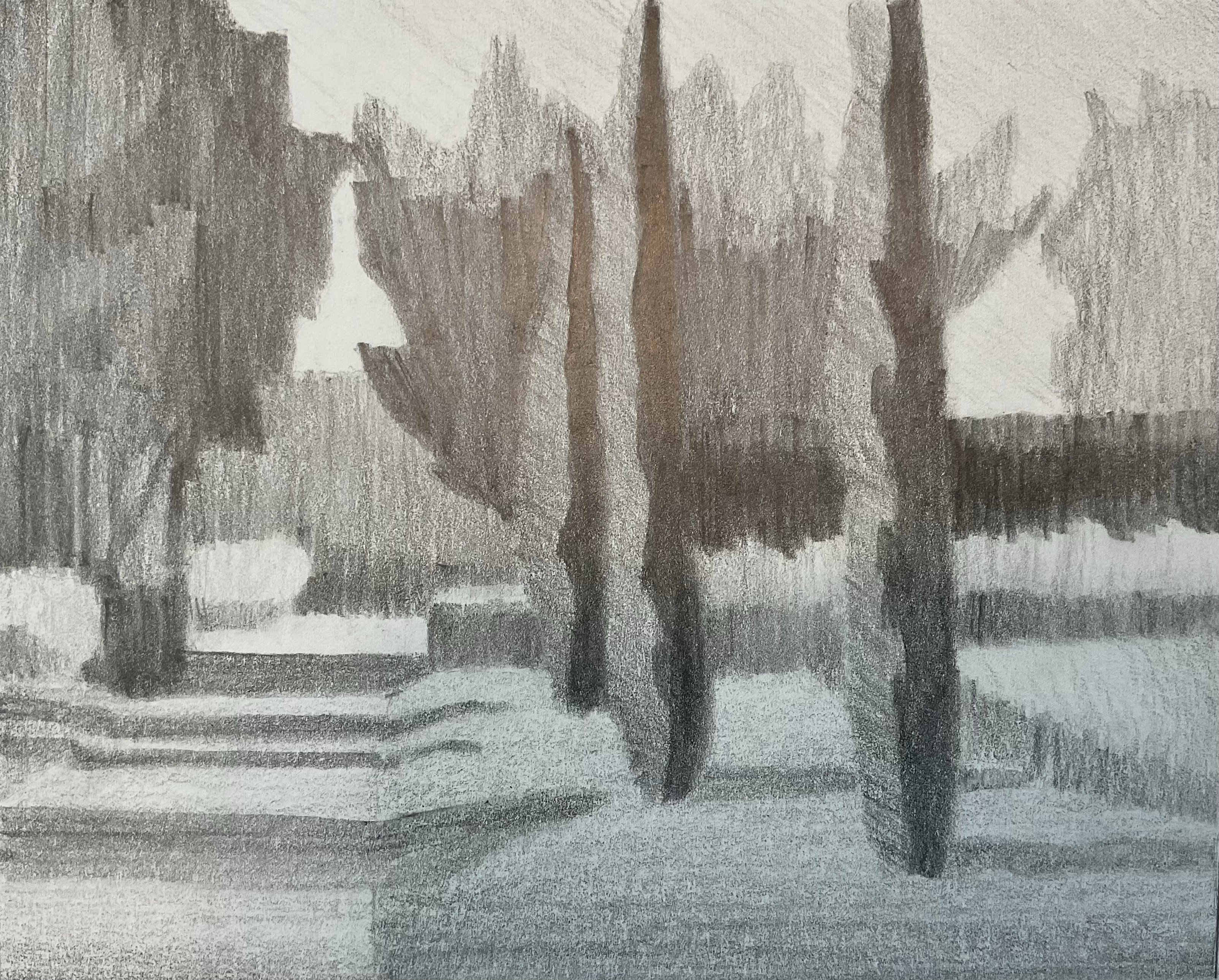
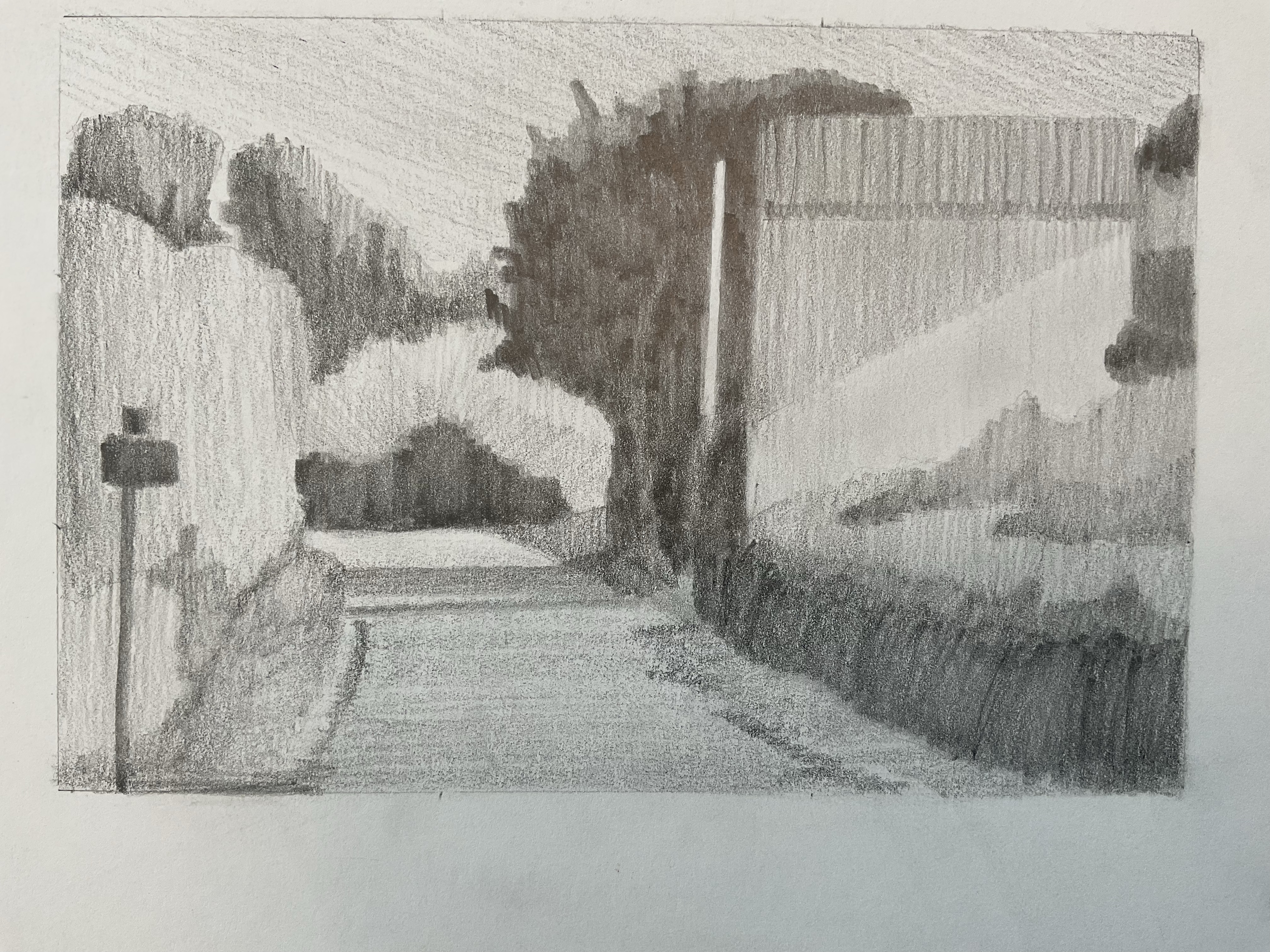
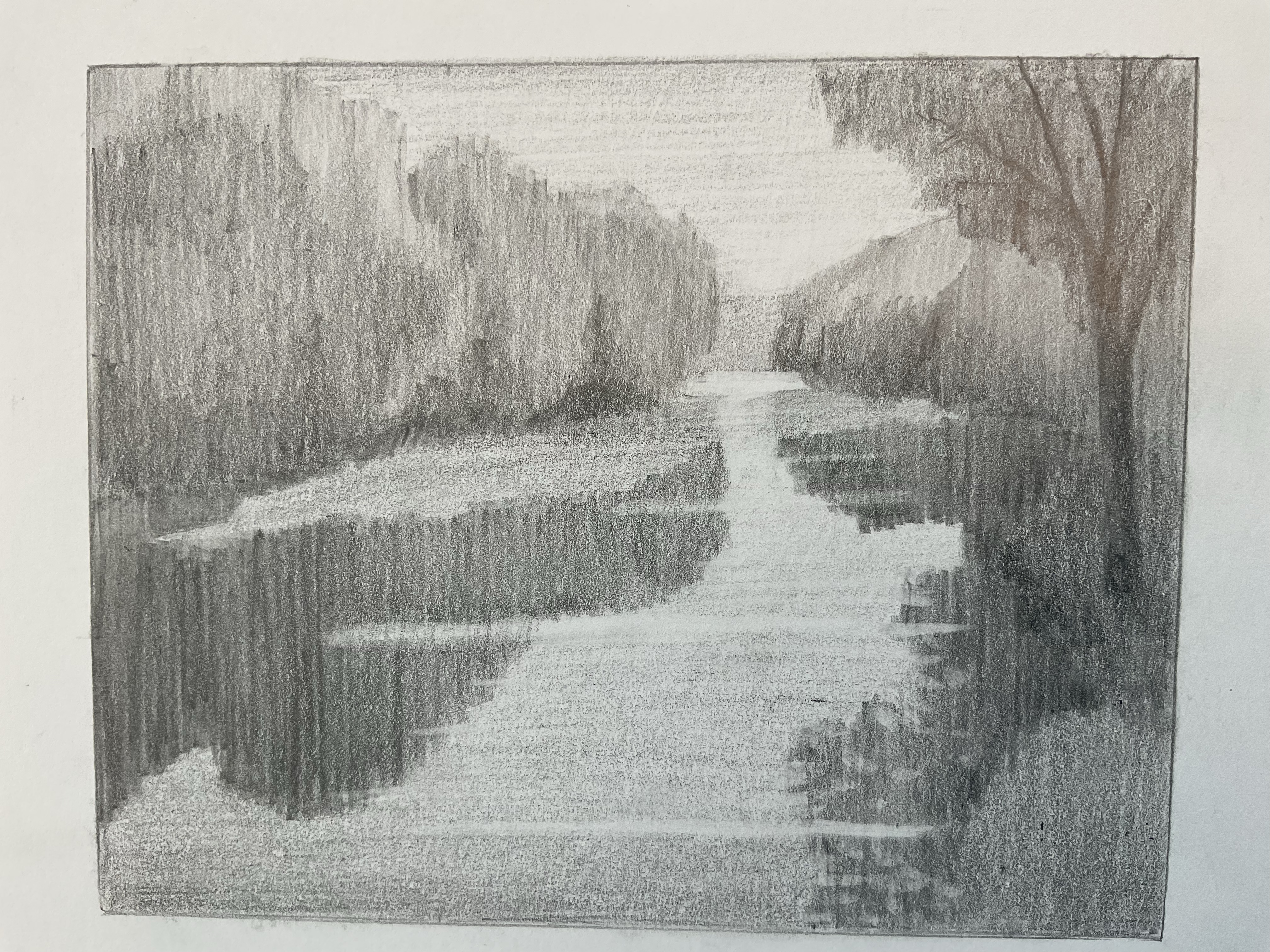
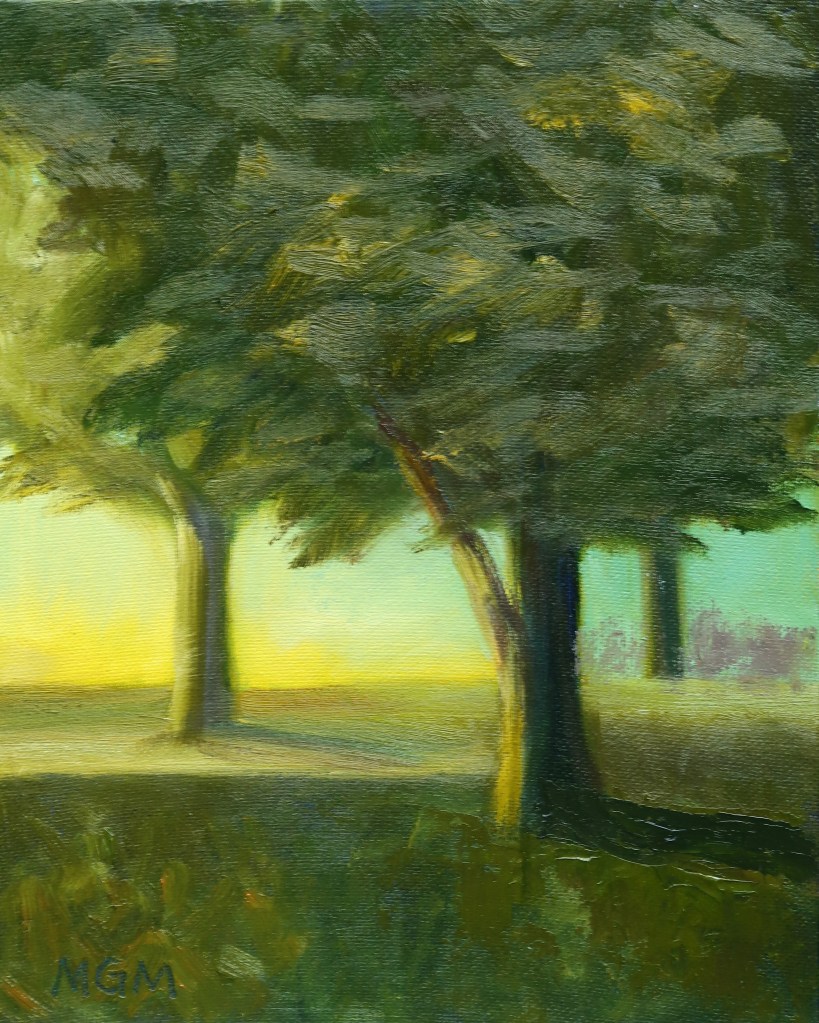
This painting was painted from 3a, the lower half of the sketch book page. I liked the lower left Notan the best and so used that for my guide. I used palette knives again throughout this one, as for Composition 3.

8 x 10 ins, oil on canvas board

The painting above was developed from the thumbnails on the bottom half of the sketchbook page, 2c. I have the 3-value sketch on the left and then four Notan possibilities to the right. I chose the lower left one from which to paint.
I think that this time I kept to the value pattern more accurately, but I lost it a bit at the left end of the tree line—the values of sky/trees/field become too similar there. I like these colors better than my Composition I painting.
Mary Gilkerson was an artist and teacher from South Carolina, whose art and videos I have liked for a while. She painted colorful landscapes using a palette knife. Sadly she passed away in April 2022.
The people in charge of her estate decided to offer her video classes to the public on YouTube at no charge. Thank you!
I have been following her ‘Composition, Color and Light’ course and it has been extremely helpful in learning how to compose a landscape, and in fact a painting of any subject.
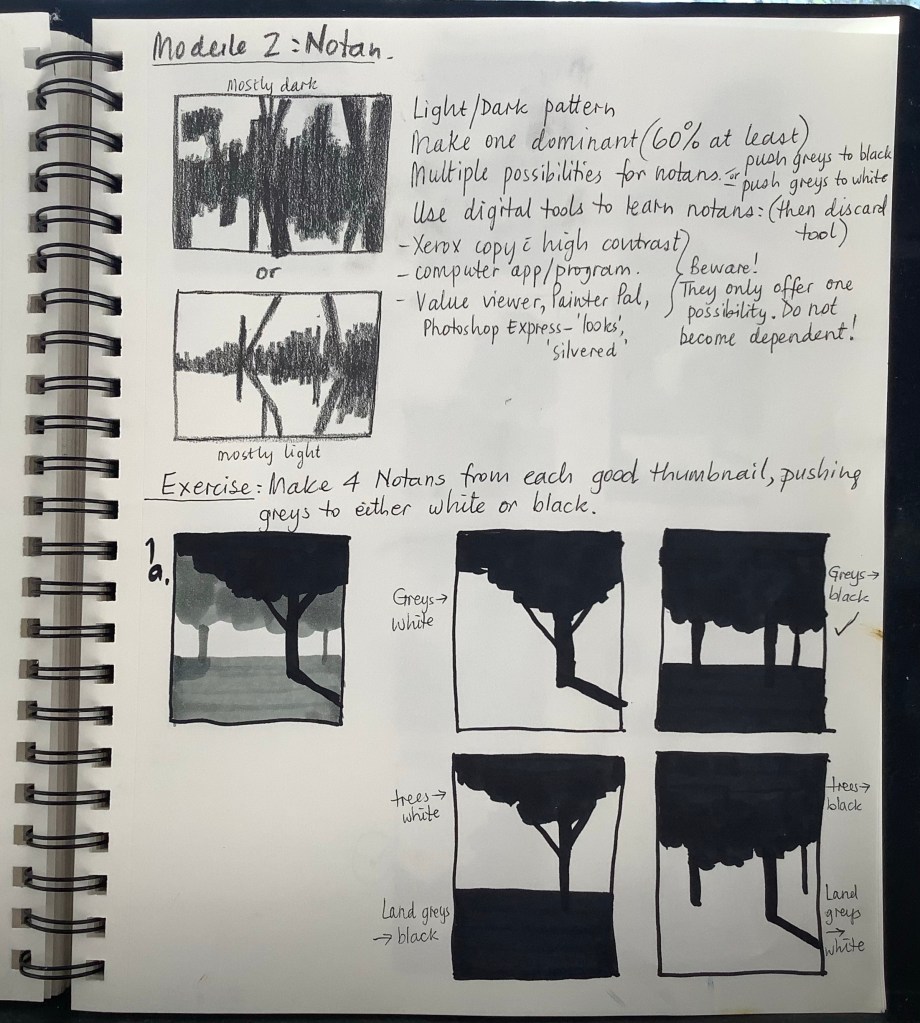
She makes the process of developing a Notan (black and white value pattern) from a photograph understandable in a way I’d never seen before:
1. Develop a 3-value study of the scene in question.
2. Make several thumbnail variations pushing the mid-value to either black or white.
3. Choose the one that is most pleasing to you as the value pattern for your painting.
Below is my sketchbook showing this process, and indicating the value pattern I chose. But then I didn’t keep exactly to it, and I used strange colors, so I was not entirely happy with the painting above. I have since practiced quite a bit more and have some better results—in future posts!
 marymayhewart